Friday, January 20, 2012

APOD 3.1 The Hunter's Stars

The Hunter's Stars


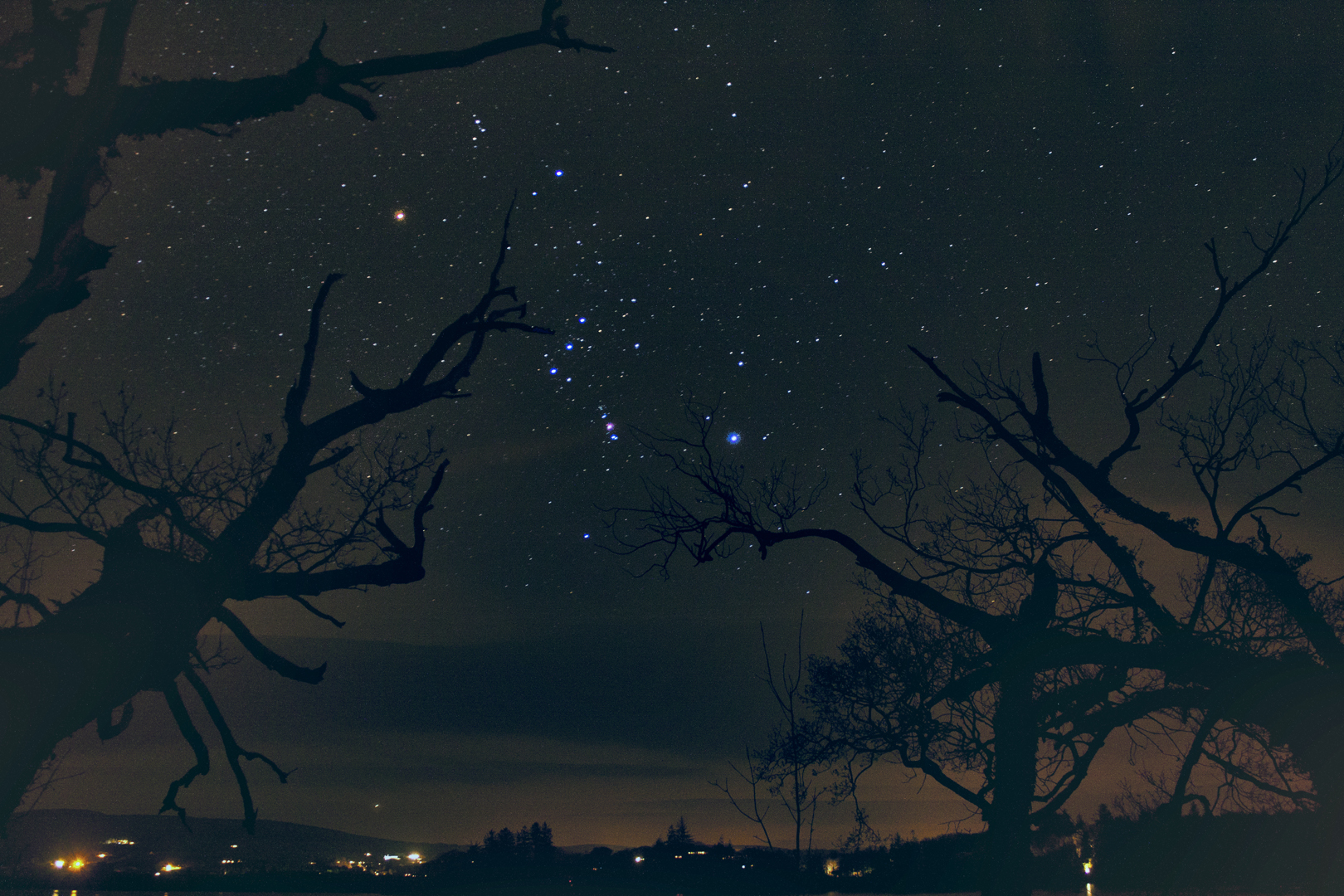
This image was interesting to me because of a) its recognizable-ness, and b) because you can actually see the colors of the different stars. Most times it seems as if the stars in the sky all have the same whitish, yellowed hue even though in reality they can be red or blue as well. In the constellation Orion there are a red and a blue star, named Betelgeuse and Rigel respectively. Betelgeuse is a red giant star and Rigel is a a blue supergiant- making it seem even more incredible to be able to determine their colors with the naked eye. What appears to be another star here is the light red glow in Orion's belt. This 'star' is actually the Orion nebula and is also seen easily with the naked eye. So overall this picture is not incredibly fascinating by itself, but the concept behind the subject matter is.

Friday, January 13, 2012

Observation 1

For purposes of this observation set I'm posting the total hours in one chunk post.
I tried something different this time and instead of just testing my locating and labeling abilities I went out for a few hours each night for three nights in a row to see if I could personally note the changes and movement of the stars in relation to the moon, as well as the moon's phases.
The first night I went out, at my house in Sarasota, beginning around one thirty in the morning. I was able to see the moon a few days before full and I made note of Pisces and Orion almost at the highest point in the sky, with Ursa Major to the north (obviously) handle pointed to the northeast, and Polaris not visible because of the light from the moon. To the northwest I also made a note of the Hyades, but mostly just because I like them.

The second night was slightly clearer to start but clouds rolled in before I was able to make a longer-lasting comparison. Before they reached full cover I did see Pisces and Pisces Austrinus move westward slightly, with Orion right behind them. The moon was close to Orion's belt and was slowly making its way into Pisces with a day before it was due to be full.

By the third night the moon was full and the sky was clear of any clouds or fog, a good sign. Though its brightness did obscure some of Pisces, Pisces Austrinus helped my identify its location west of the zenith point, and the belt of Orion lead me to his shoulders and head- also moved westward yet again. The Hyades were so small they were hard to make note of as far as shifting is concerned, but like I said, I just like them. The north star was barely visible, and even then only because the handle of the Big Dipper had rotated in its circumpolar manner to point it out to me more easily than on the slightly clouded first night. Oh, this night I also found Arcturus by myself for the first time, mainly because of the handle of Ursa Major as well.
APOD 2.8 The Umbra of Earth


The Umbra of Earth

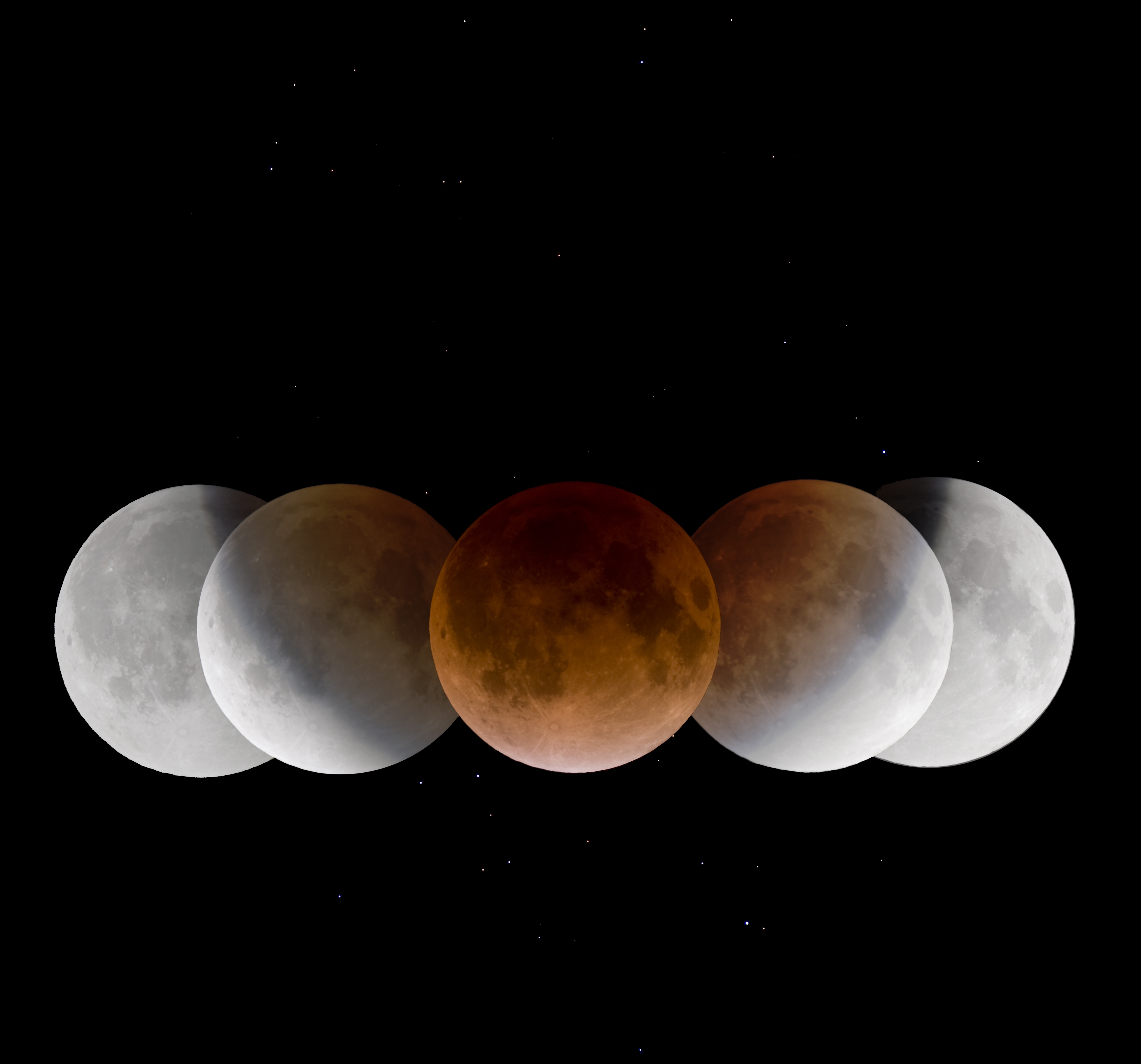
It doesn't seem like such an amazing thing at first glance, I mean there are overlapped images of the moon, and some are darker because of shadows, and they look almost like eclipsed or partially full moons. But if you really sit down to think about it this is incredible. We can see the shadow of the Earth. The shadow of the Earth. An entire planet. Technically speaking this image is only the umbra, or the darker and inner shadow of the Earth. The cross section that is visible is seen most easily during a lunar eclipse, which is why these images work so well together to demonstrate the concept of Earth having not only a shadow, but a recognizable shadow we can see while on the Earth itself.

APOD 2.7 Eclipsed Moon in the Morning


Eclipsed Moon in the Morning

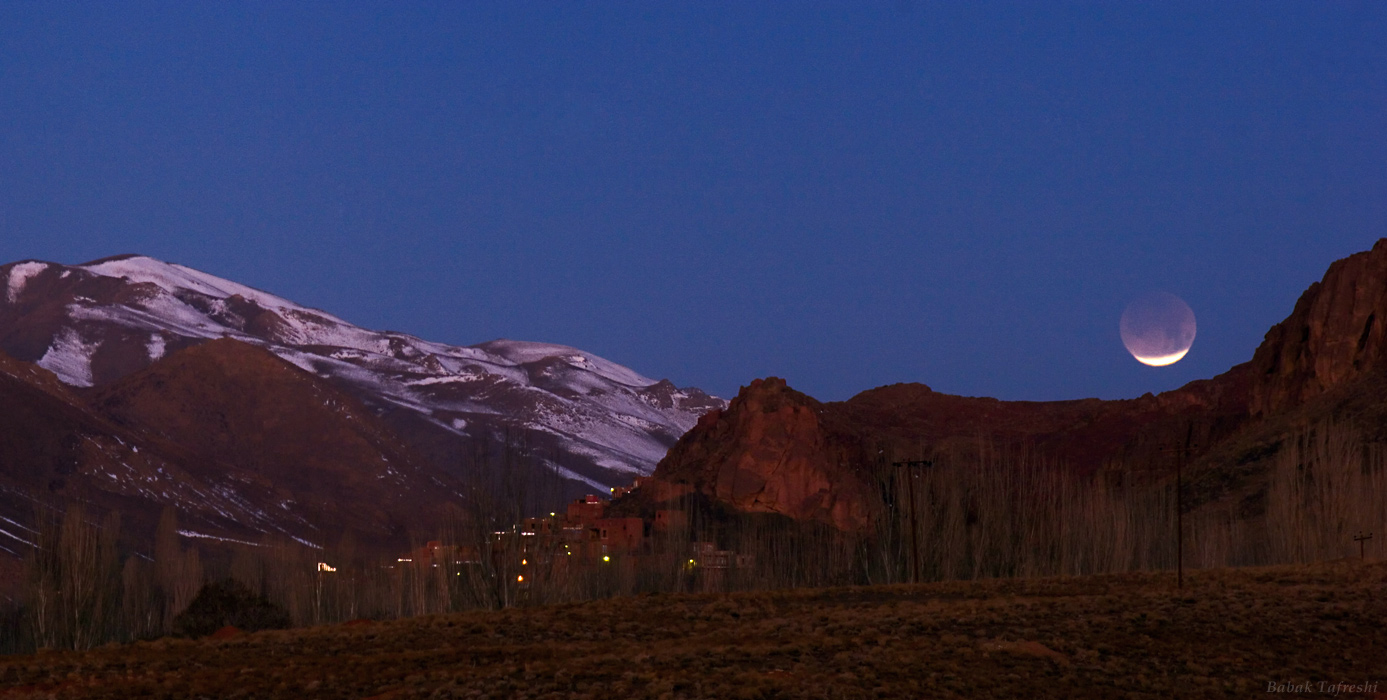
This image, taken in Iran, shows the very beginnings of a lunar eclipse to happen on December 10. The excitement in seeing a total lunar eclipse is almost palpable in the astronomical community in the days leading up to the eclipse, particularly in areas where the eclipse will be fully viewable. What many people don't realize is that, as seen here, the moon and in so the eclipse are both visible in the early morning as well as night so even if you are not able to see the full eclipse from your location, the chances are that you will at least be able to see part of it at some point. There's a sort of rugged beauty that this picture captures, much like that of the moon, that is all too often overlooked.

APOD 2.6 Light Echos from V838 Mon

Light Echos from V838 Mon

 Pardon my frankness, but at first glance this image of the light echo expanding out from the light flash of V838 Mon looks like a danish. A cherry danish. Admittedly this echo is much more complicated, starting with the great expansion of V838 Mon in 2002, and then suddenly fading again. And in addition a stellar flash like that of V838 Mon had never been seen before so there was nothing to compare the event to for researching opportunities. All that is currently known is that this light echo, about three light-years in diameter, is light from the flash reflected in rings by the interstellar dust surrounding the star. 

APOD 2.5 Young Moon Meets Evening Star

Young Moon Meets Evening Star

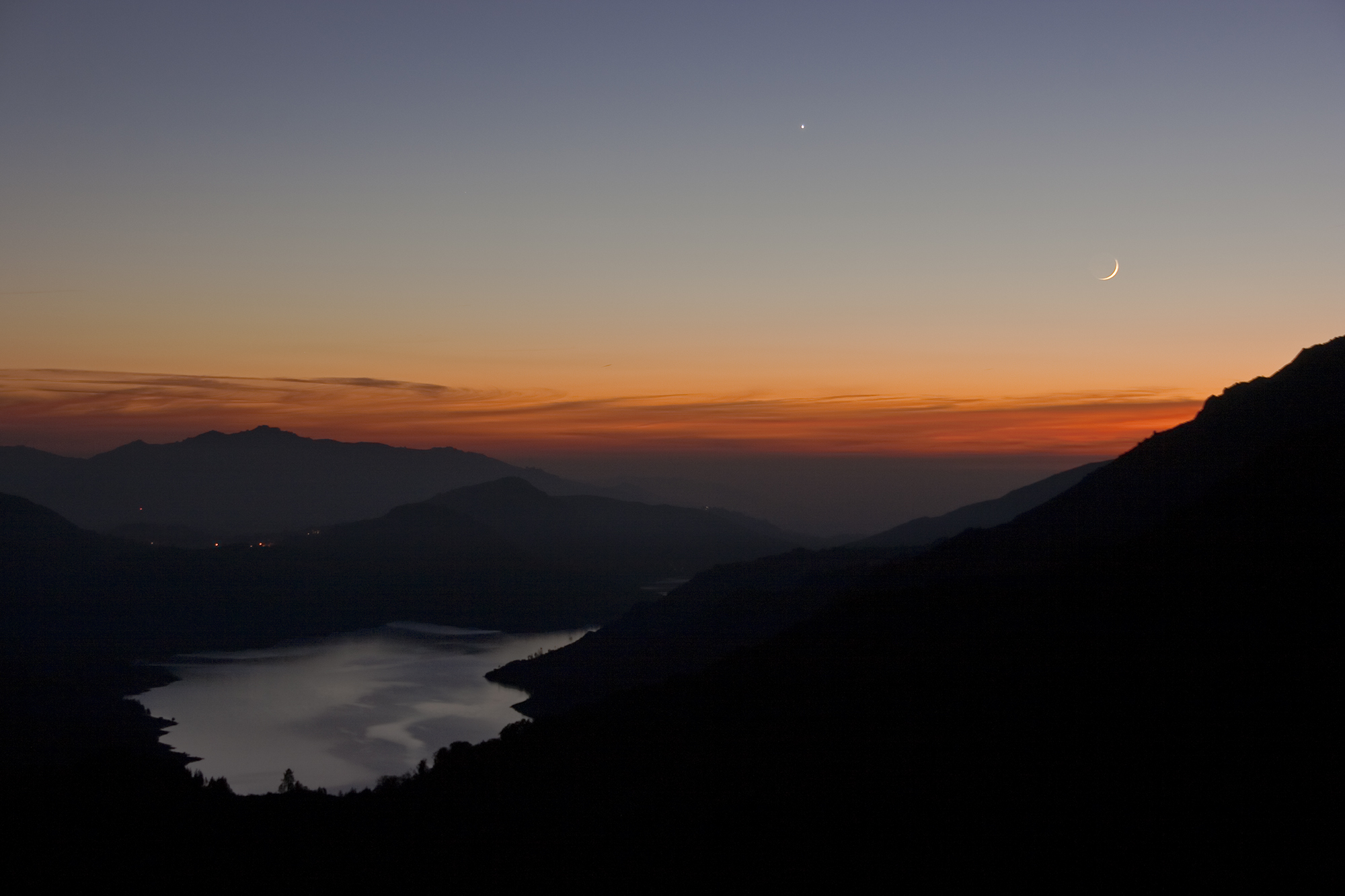
People always say that astronomy is something that everybody can do, that it's simple and if you put even minimal effort into it you can get amazing results and knowledge. That idea is what I like about this week's APOD. You can see the moon barely into its second day as a waxing crescent, and the current evening star Venus which at this point has just replaced Mercury in visibility. The information section of this APOD isn't exactly bursting with news, but this day has other importance. Anyone from anywhere in the world, given clear skies, could have seen this this night. I know I did, and just knowing that we are able to look upon the same sight as those in northern Portugal, from where this image was taken, is enough learning for one day.

APOD 2.4 Pelican Nebula Close-Up

Pelican Nebula Close-Up

The Pelican Nebula that is in this APOD spans thirty light-years and is in the constellation Cygnus. While it is fascinating, I did not choose this APOD because of the fact that it covers the Pelican Nebula so much as how it covers it. The picture shown is in full color, and is gorgeous. The thing is that the Pelican Nebula does not look like this if one focuses in on it in the night sky. The colors were 'translated' into colors in the visible light spectrum for comprehension purposes. On top of this it is named the Pelican Nebula. Maybe it's just me, but I have a hard enough time seeing Cygnus as a swan let alone seeing the pelican in this nebula. So to me this is extremely misrepresented both in name and in the visual aspect. It just kind of shows how, while stunning conceptually and visually, certain parts of astronomy are just not along a logical sequence.